Leicester Faith Trail
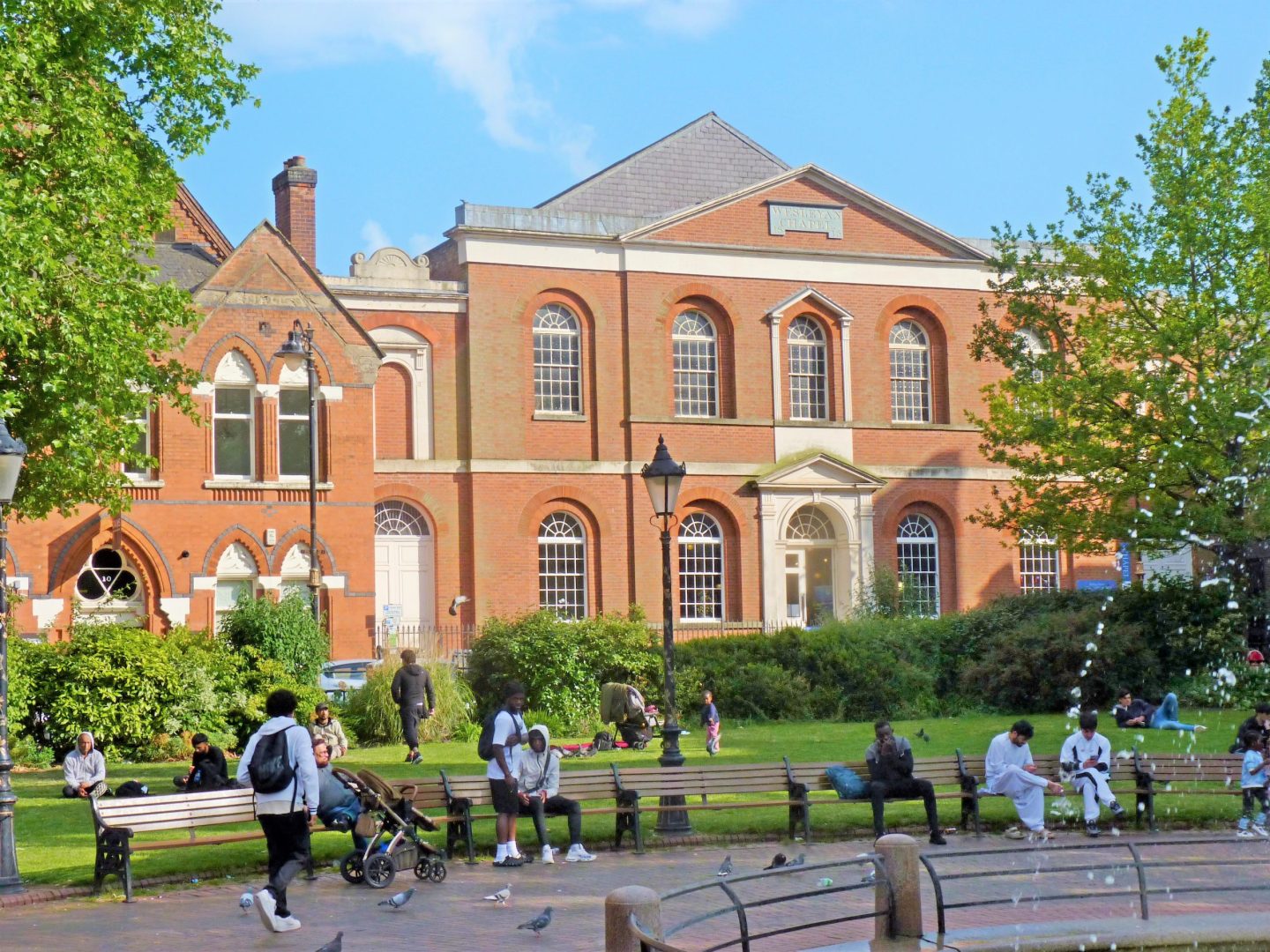
Leicester is one of the UK’s most diverse cities, home to a wide range of faiths that have shaped its history and communities. The Leicester Faith Trail invites visitors to explore places of worship from different traditions across the city. These welcoming, living spaces offer insight into beliefs, heritage and local life.
Designed to encourage understanding and curiosity, the trail provides a meaningful way to experience Leicester’s culture, architecture and stories from a fresh perspective.
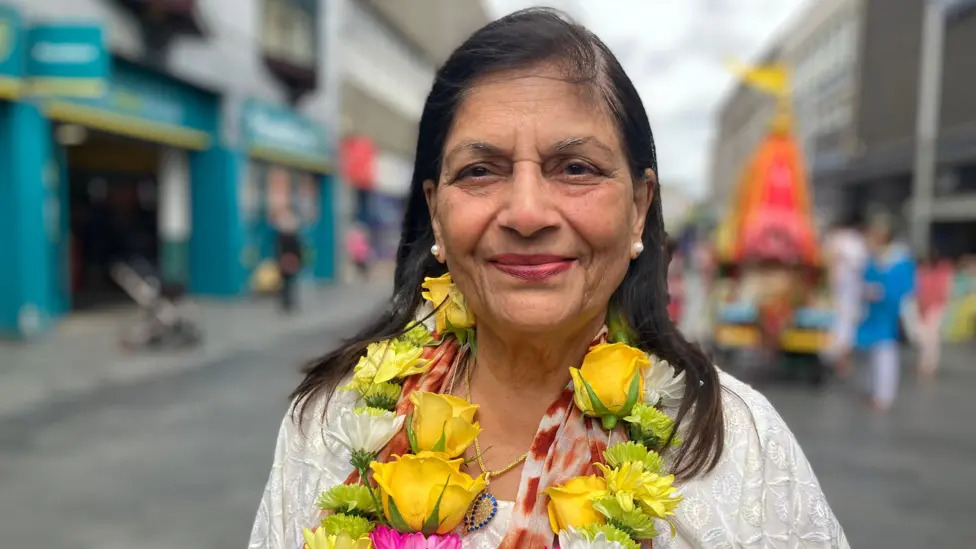
The Leicester Faith Trail was developed with the advice and support of Cllr Manjula Sood MBE, who sadly passed away in 2025. A tireless champion of interfaith dialogue and community cohesion, Manjula’s passion for bringing people together across cultures and beliefs helped shape the spirit and purpose of this trail. Her legacy continues to inspire this project, and we are honoured to acknowledge her contribution here.
-
1 HourEstimated duration
-
2.5kmLength
-
FlatGrade
-
CityType
Route Waypoints
1. ISKCON Leicester
ISKCON Leicester has an information centre which is part of its spiritual and community hub.
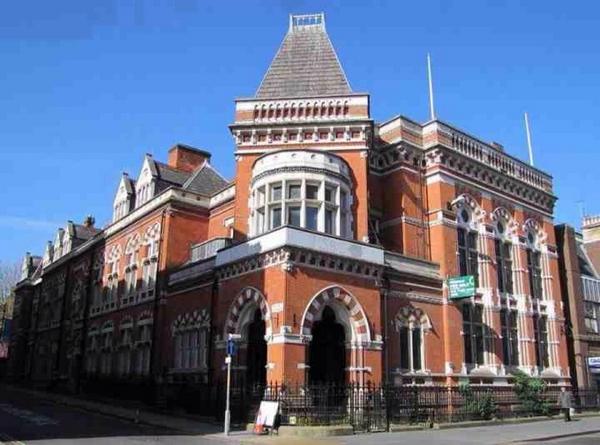
ISKCON Leicester follows the Vaishnava tradition of bhakti yoga, chanting the Hare Krishna mahamantra, cultivating spiritual wisdom through Bhagavad Gita study, and offering devotional service to Lord Krishna as taught by Sri Chaitanya in the 1500s. Founded locally in the 1970s, it grew from small gatherings to a vibrant community. The centre occupies Leicester’s iconic former HSBC Bank on Granby Street, generously donated by a local family from Leicester and London. This landmark building now hosts mantra meditation, festivals, and cultural events, blending historic architecture with spiritual heritage in the city’s heart.
2. Jain Centre Leicester
The Jain Centre Leicester functions as an information centre, offering educational activities, community programs, and public tours, although it is not open to the public at all times.
Jainism teaches non-violence, truth, non-stealing, chastity, and non-possession, seeking liberation through self-discipline and reverence for all life, guided by the 24 Tirthankaras.
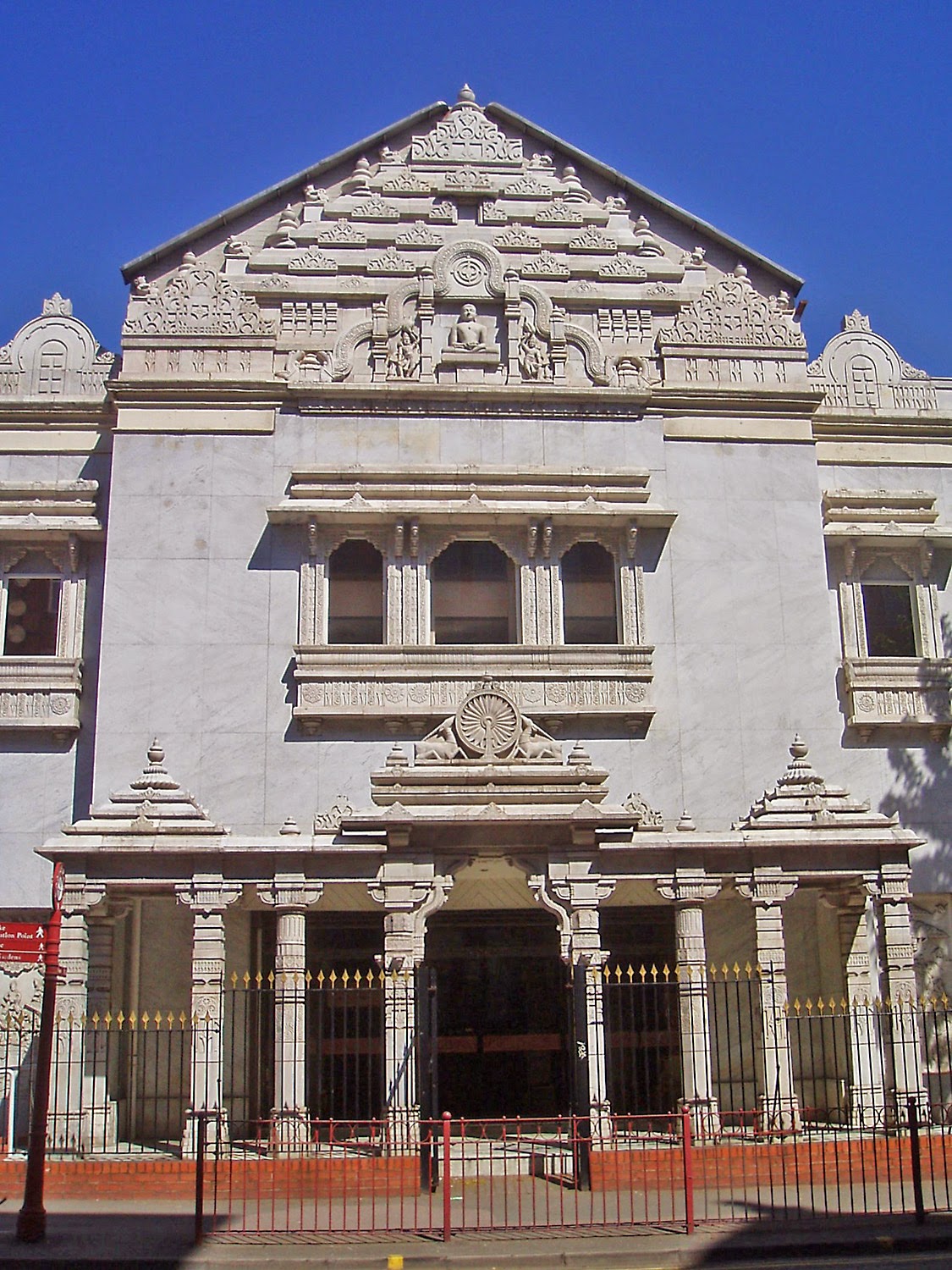
Established in 1988, the Jain Centre in Leicester is the Western world’s first consecrated Jain temple complex, housing sacred images of Bhagwan Shantinath, the 16th Tirthankara. Located on Oxford Street, this former church was transformed with intricate marble carvings. It unites Swetambar, Digambar, and Sthanakwasi traditions under one roof, featuring temples, a museum, library, and auditorium, promoting Jain spirituality and culture.
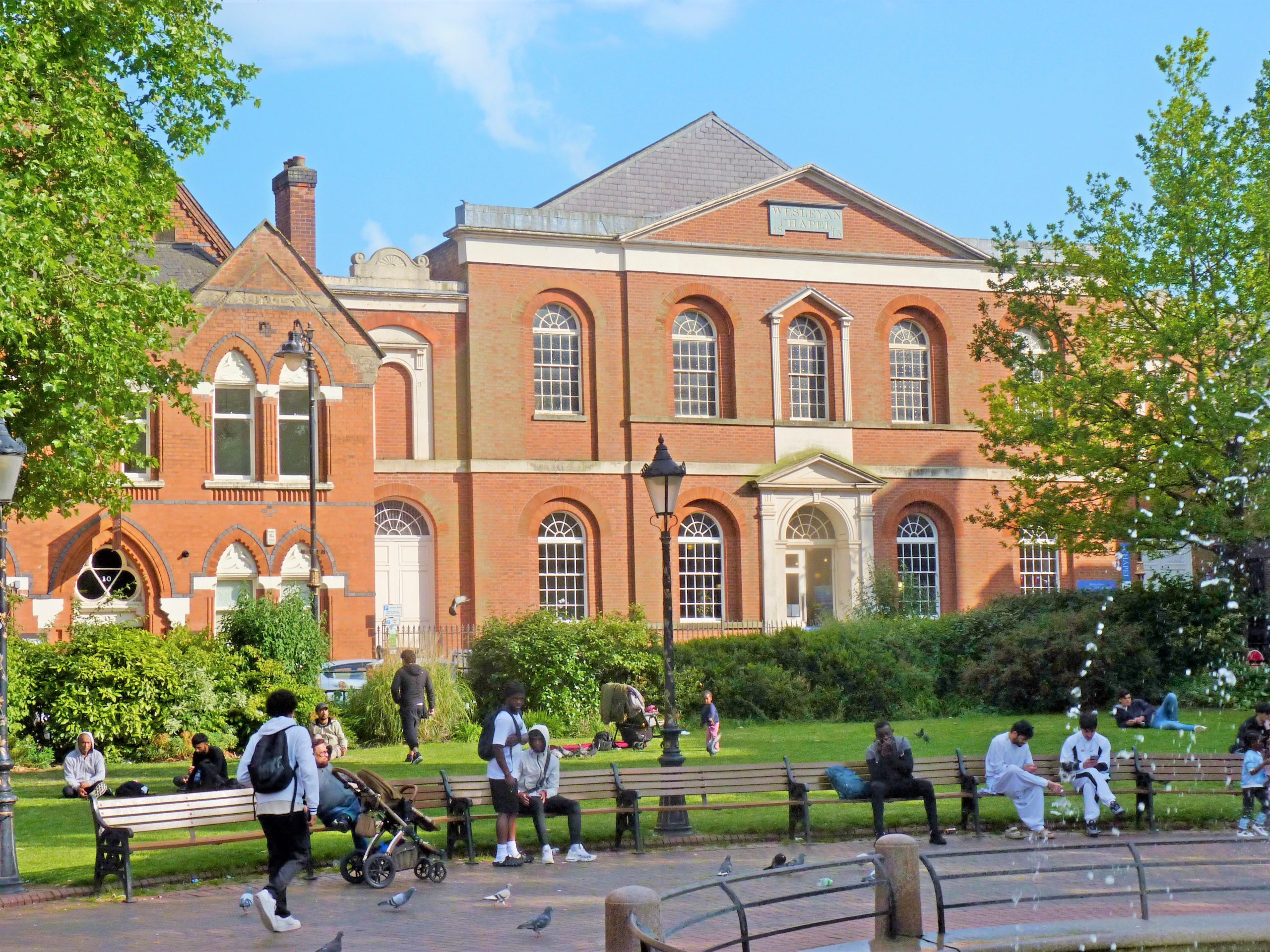
3. Bishop Street Methodist Church
Bishop Street Methodist Church does not have a dedicated “information centre,” it does offer several facilities and services that function as points for community engagement and information like Chapel Café, Exhibition space, Meeting rooms, Website, Church office and Facebook group.
The Leicester Council of Faiths embraces interfaith harmony, fostering mutual respect, dialogue, and cooperation among diverse religious communities to build a cohesive, peaceful society.
Formed in 1986, it works to uphold Leicester’s reputation for peaceful coexistence among different faiths. The Council promotes trust and understanding, represents faith communities on key issues, and provides accurate information. Based at the Welcome Centre on Humberstone Road, it organises events, forums, and educational initiatives, strengthening bonds across the city’s rich religious landscape.
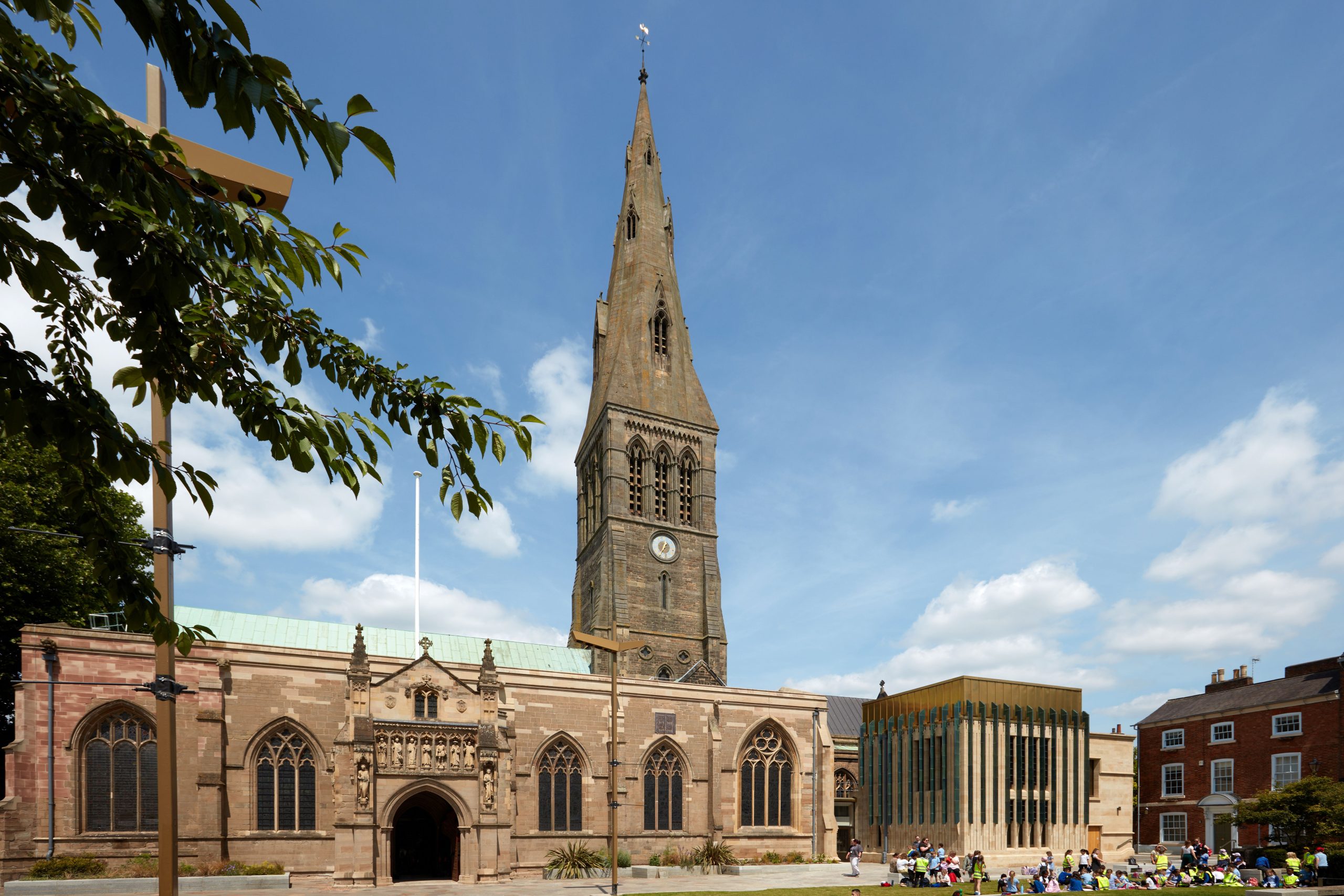
4. Leicester Cathedral
Leicester Cathedral has a Heritage & Learning Centre that serves as an information and visitor centre. It was completed as part of the “Leicester Cathedral Revealed” project and officially opened in May 2025.
Leicester Cathedral honours St Martin of Tours, a 4th-century Roman soldier turned bishop, embodying compassion, charity, and Christian devotion through worship and community service.
Built on a Roman site, the cathedral has served Leicester’s spiritual, cultural, and civic life for over 1,000 years. Designated cathedral in 1927, it stands in the Old Town as the mother church of city and county. Renowned as King Richard III’s final resting place since his 2015 reinterment, it hosts worship, celebrations, and remembrance.”
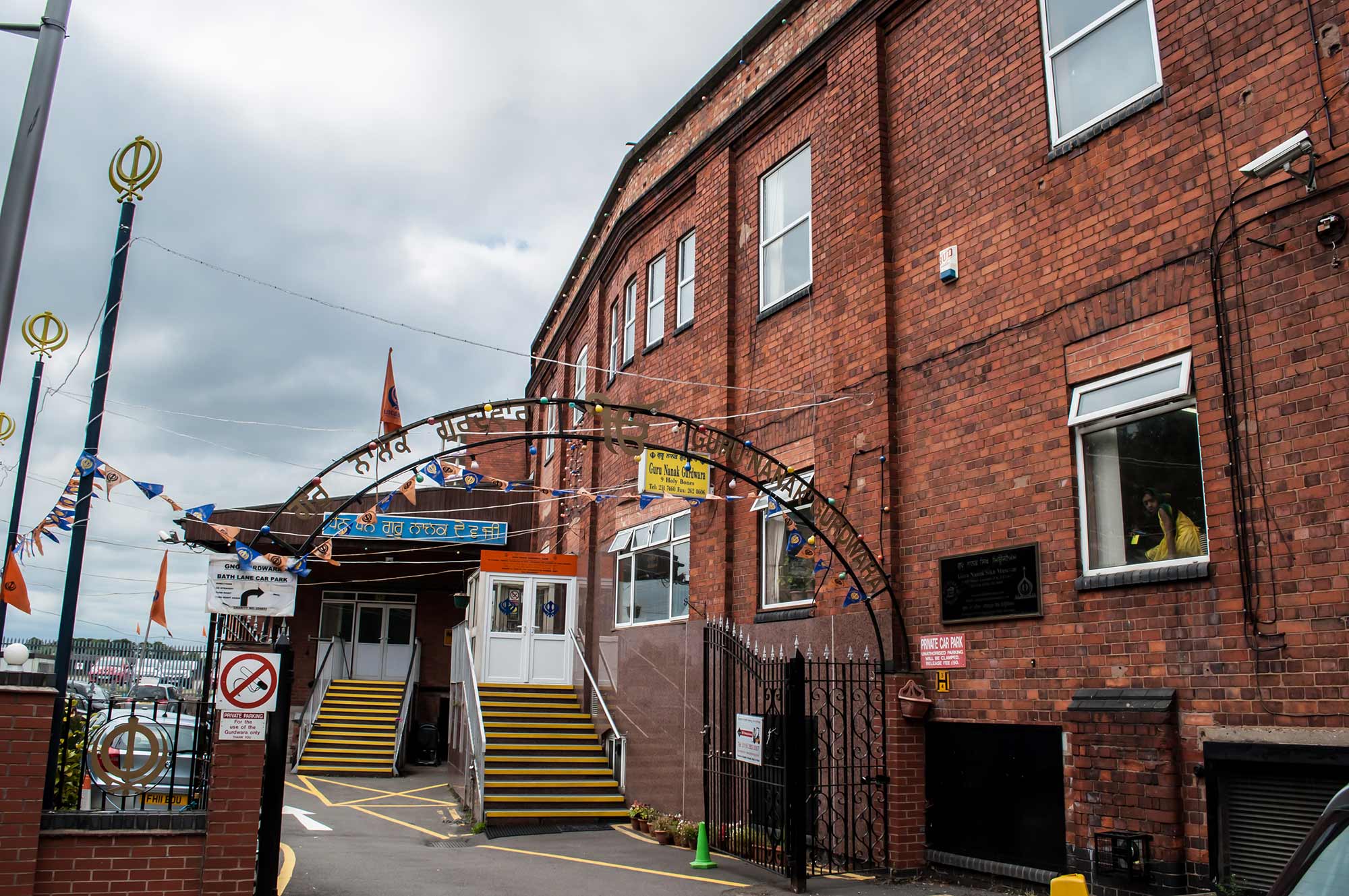
5. Holy Bones Temple/ Sikh Museum
The Guru Nanak Gurdwara at 9 Holy Bones in Leicester does provide information for visitors. Within the Gurdwara is the Guru Nanak Sikh Museum, established in 1992, which contains exhibits and artifacts related to the Sikh religion and history. Visitors can take a self-guided tour or, for educational visits, arrange for a guided tour with a knowledgeable volunteer. The Gurdwara also functions as a community centre and offers free communal vegetarian meals (Langar) to all visitors.
Sikhism teaches equality, selfless service, and devotion to one God, through meditation on the divine name, honest living, and sharing with others, as founded by Guru Nanak.
Leicester’s first permanent Gurdwara, Guru Nanak Dev Ji, moved in 1989 to a former knitwear factory in Holy Bones, named after a medieval path to St Nicholas Church. Sikhs settled post-World War II, initially worshipping in homes and halls. Founded in the 1960s on New Walk, it now hosts a Punjabi school, library, community centre, and Europe’s first Sikh museum with artefacts, war photos, and a Golden Temple model.
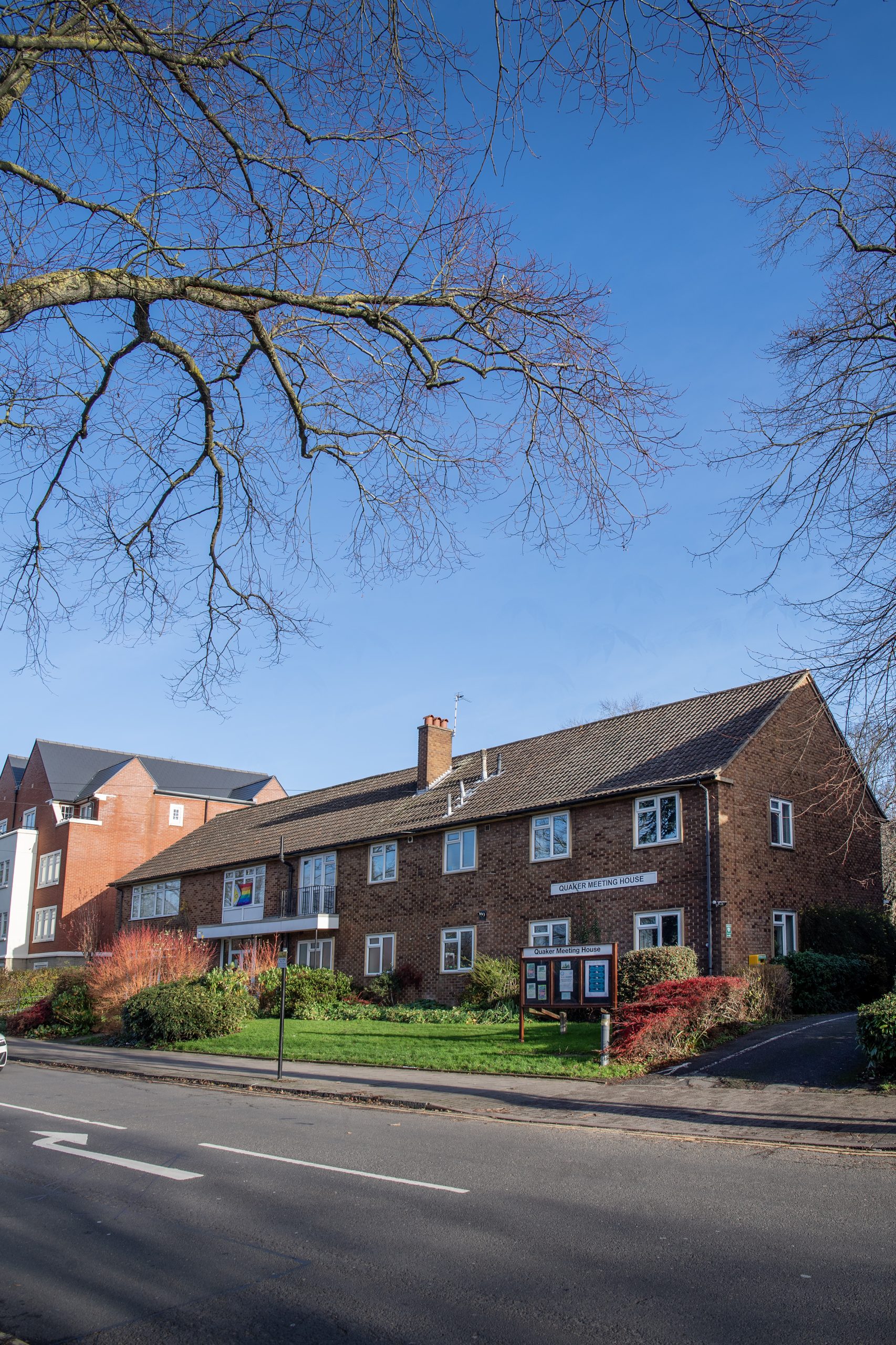
6. Leicester Friends Meeting House
Quakerism recognises a divine spark in every person, promoting peace, equality, simplicity, and silent worship to connect with the inner light beyond the self.
Leicester’s Quaker history began in 1680 with land purchase in Deadman’s Lane (now Soar Lane) for a Meeting House and graveyard. Early sites on Prebend Street proved inadequate, leading to the 1955 Queens Road Meeting House. Emerging from 17th-century Christianity, the Religious Society of Friends embraces diverse insights, fostering community through silent reflection and service in the city’s heart.
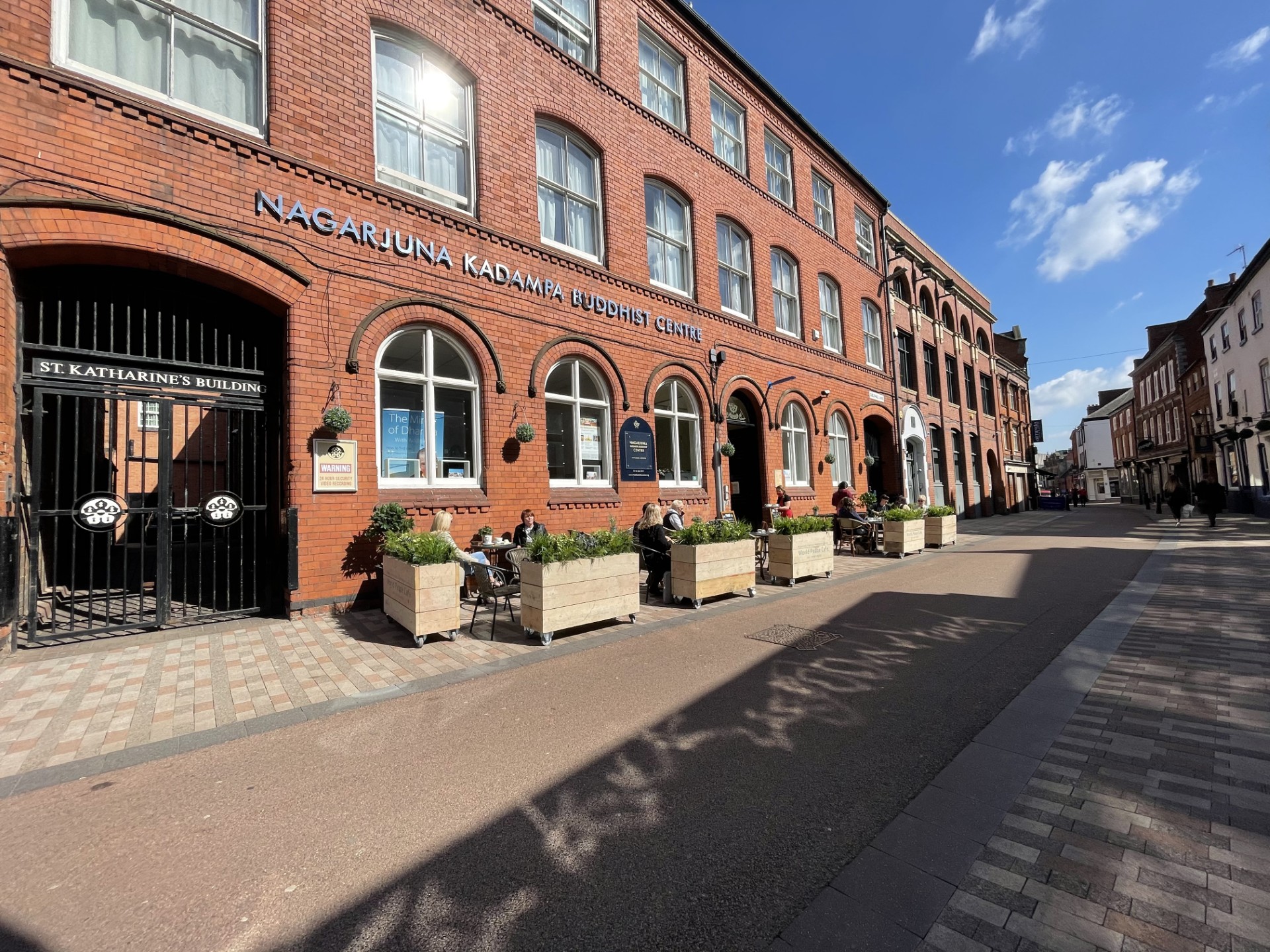
7. Nagarjuna Kadampa Meditation Centre
Kadampa Buddhism teaches modern meditation practices for inner peace, compassion, and wisdom, based on Buddha’s ancient teachings adapted by Venerable Geshe Kelsang Gyatso.
Established in 2009 on Guildhall Lane opposite Leicester Cathedral, the Nagarjuna Kadampa Buddhist Centre features a meditation room for 100, ten en-suite bedrooms, the World Peace Cafe, and Meditation Shop. It offers daily drop-in classes, courses, retreats, and three in-depth study programmes to explore Buddha’s teachings in the city centre.
8. Great Meeting Unitarian Chapel
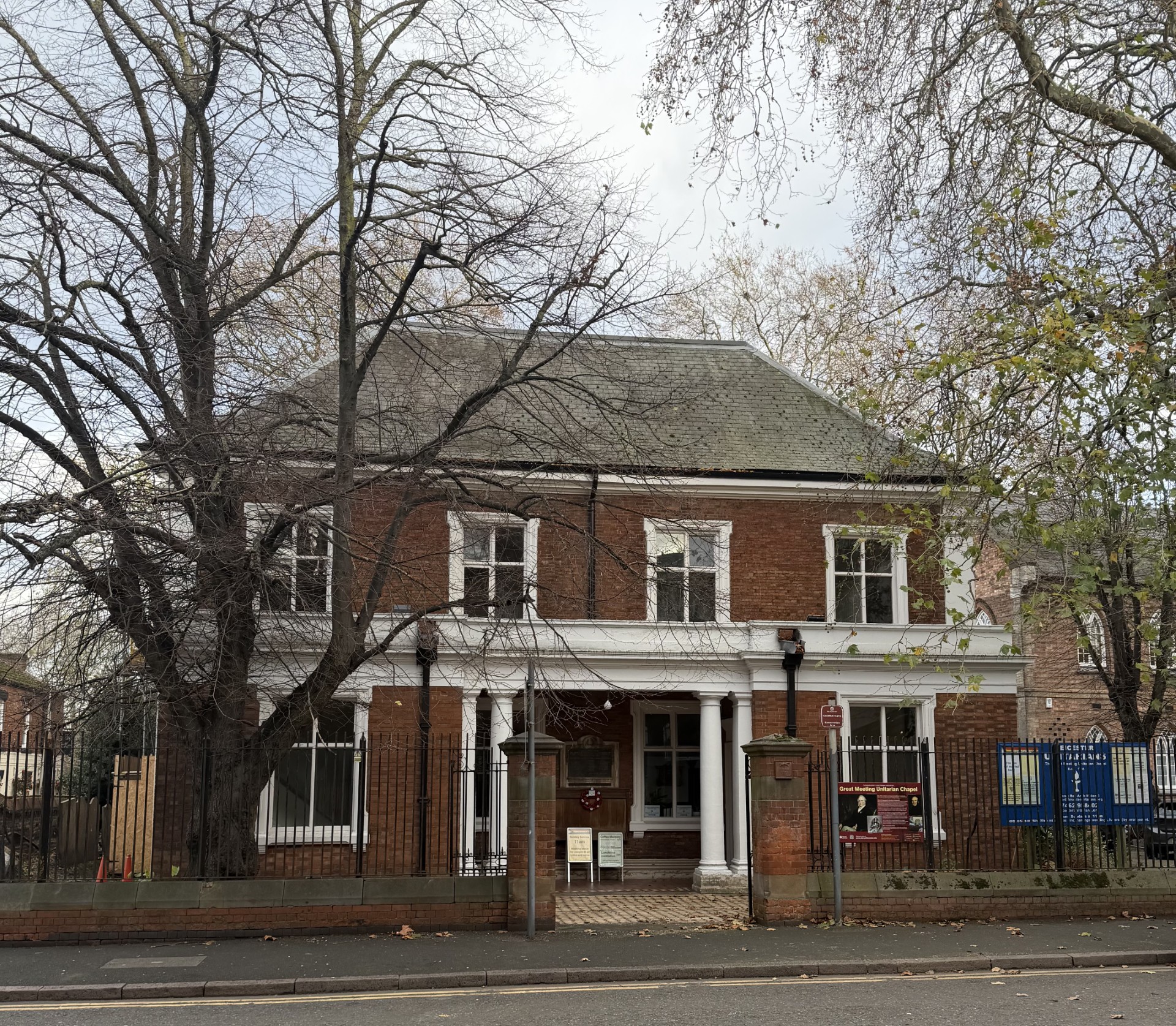
Unitarianism emphasises reason, tolerance, and social justice in faith, rejecting dogma for ethical living and free inquiry into spiritual truth.
Non-Conformists shaped Victorian Leicester’s politics and economy; Unitarians dominated the Great Meeting chapel, nicknamed “Mayor’s Nest” as the first seven post-1835 mayors were members. Thomas Paget, inaugural mayor, advocated peace and liberty. Influential figures included hosiery magnate John Biggs, Thomas Cook’s son John Mason Cook, Beethoven promoter William Gardiner, and university founder Joseph Fielding Johnson.
9. Leicester Secular Hall
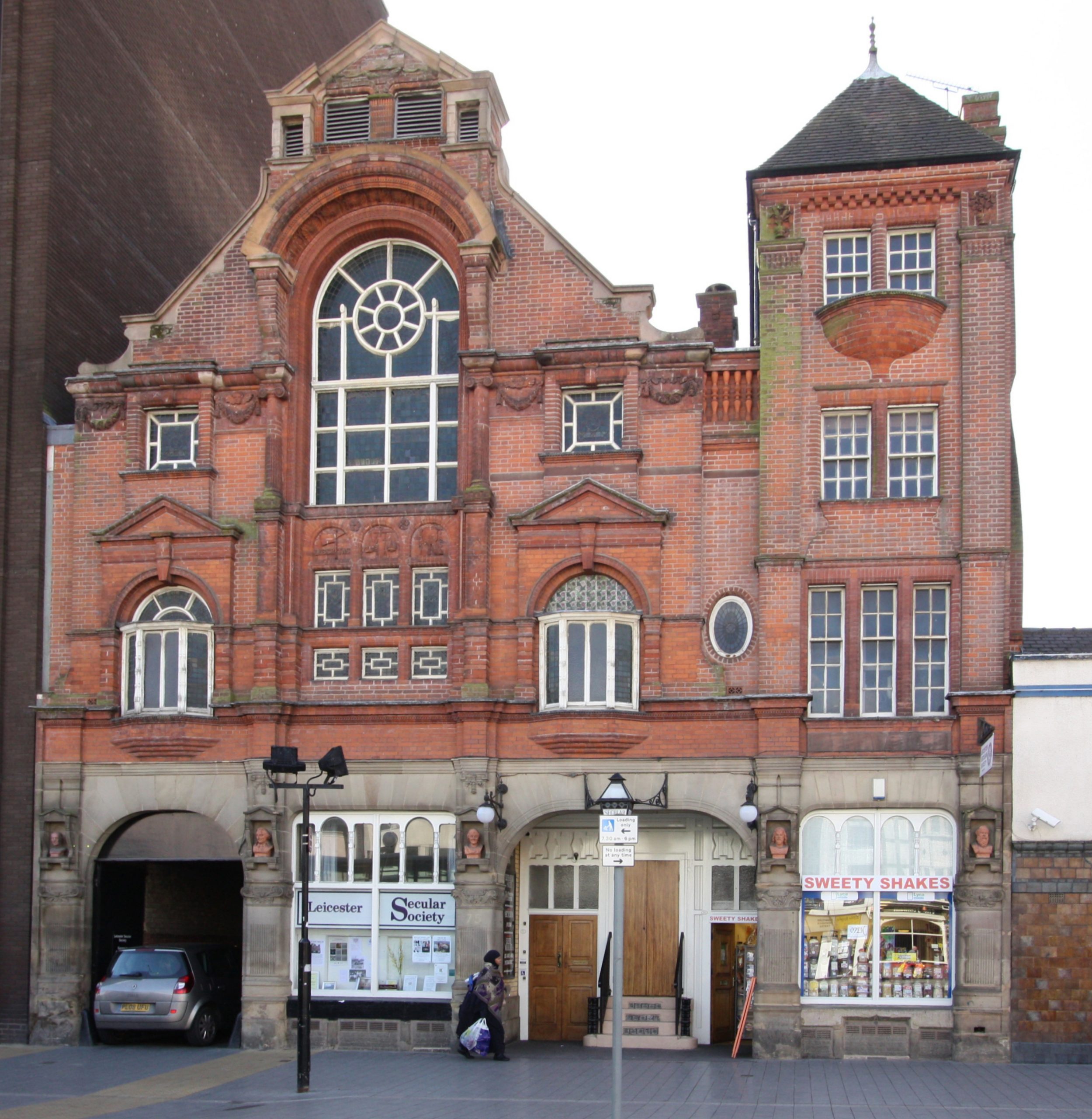
Secularism promotes reason, ethics, and free thought without religion, advocating science, humanism, and social justice for a fair society.
Founded in 1851, Leicester Secular Society built the Secular Hall on Humberstone Gate in 1881, designed by innovative architect W Larner Sugden. This Victorian landmark, opened 30 years after the Society’s inception, remains a hub for rational debate, lectures, and community events in the city centre.
10. Leicester Hebrew Congregation
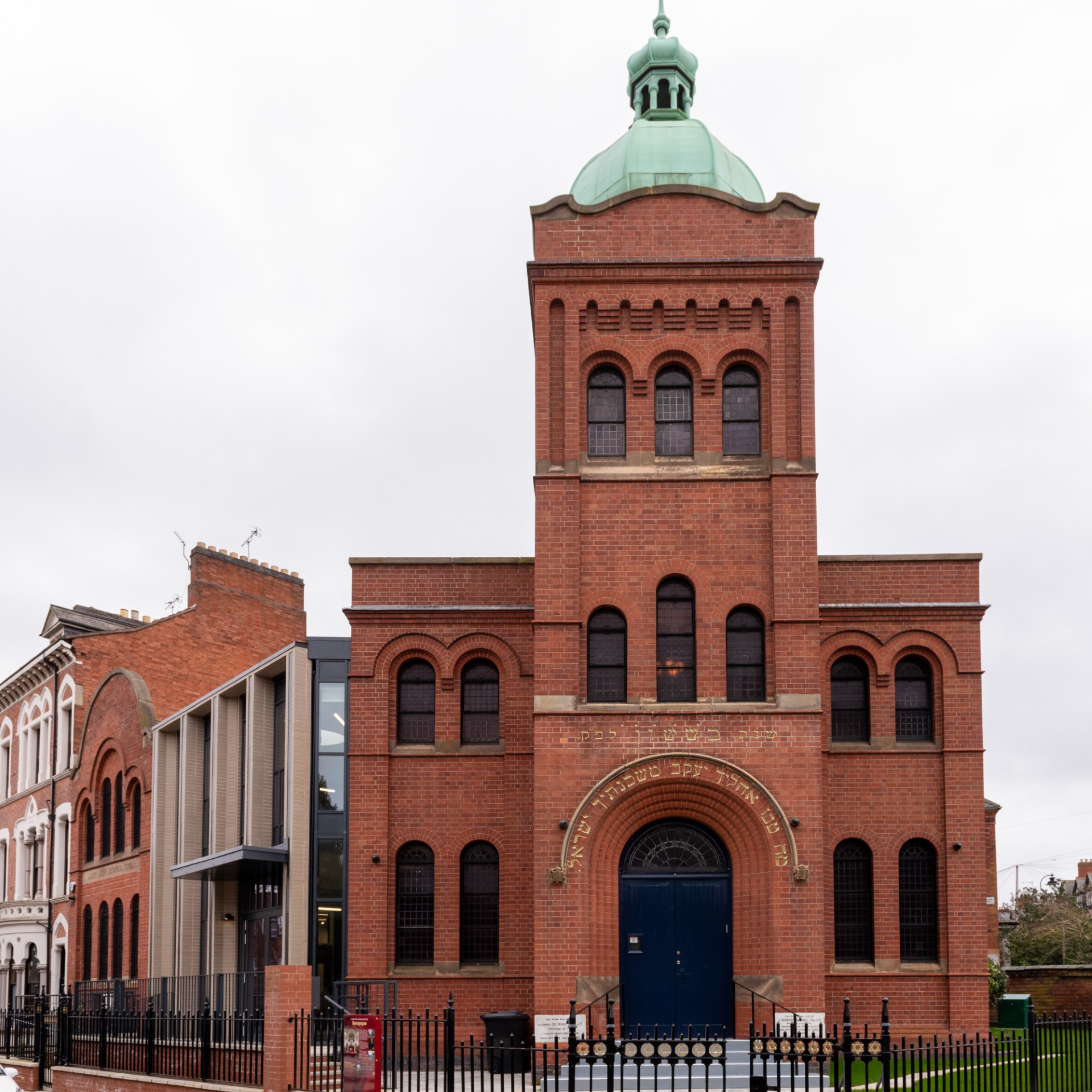
The Leicester Hebrew Congregation has a dedicated Jewish Heritage Centre for visitors. The centre was created through a grant from the National Lottery Heritage Fund.
Judaism centres on monotheism, ethical living, Torah study, and mitzvot, fostering community, justice, and covenant with God through ancient traditions.
Traces of medieval Jews exist, but modern Leicester’s community began in 1849 with shopkeepers in clothing trades and market retailing. Founded in the 19th century, the Hebrew Congregation grew via pre-WWI Eastern European immigration and post-WWII expansion. It remains a vital spiritual and cultural hub in the city.
11. Holy Cross
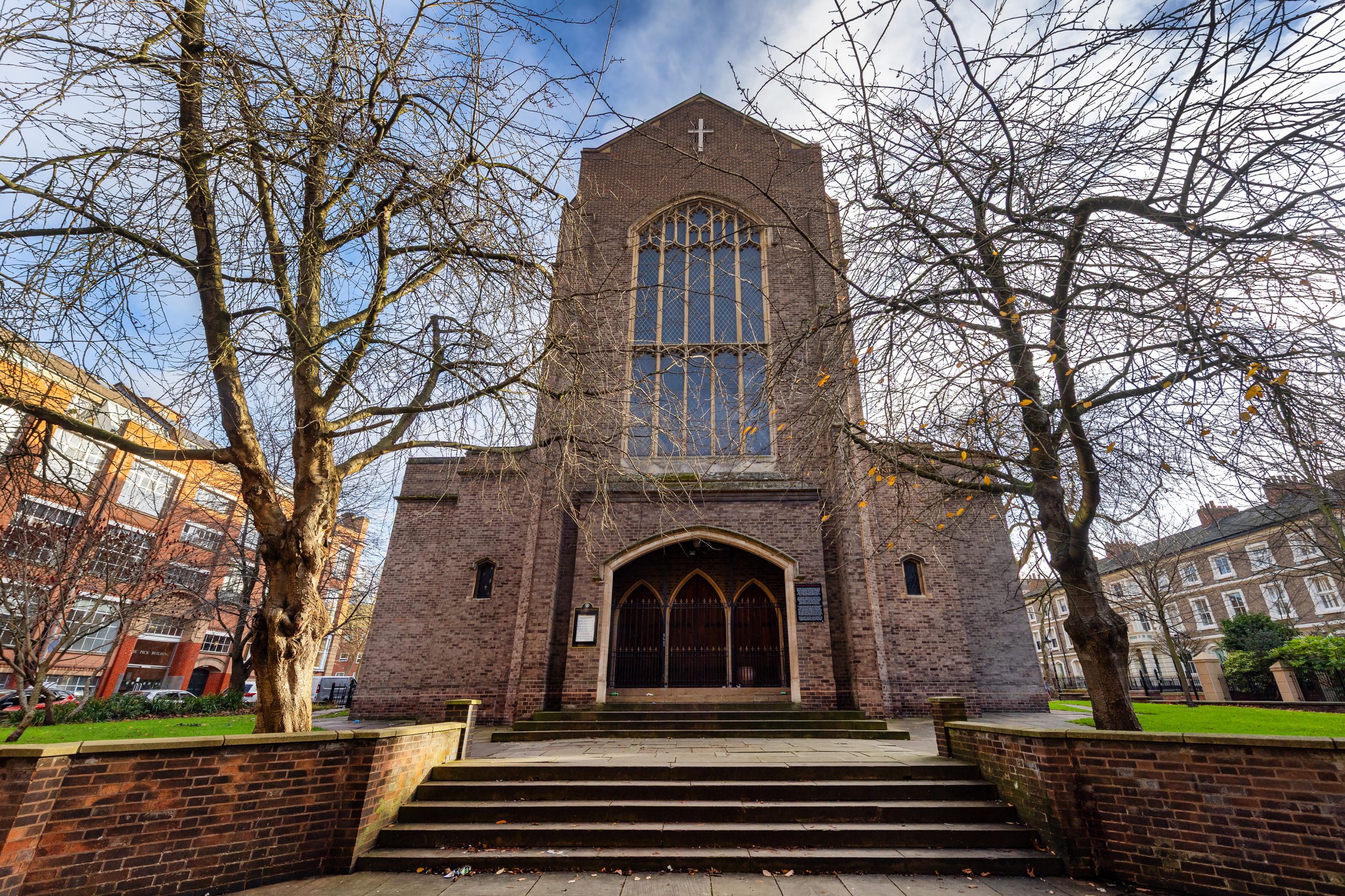
Roman Catholics upholds Christian salvation through faith, sacraments, and grace in Jesus Christ, the Bible and Tradition as God’s word, and the Trinity—Father, Son, and Holy Spirit.
Holy Cross Priory Church, served by Dominican friars since 1819 (with medieval roots from 1247), joins a global Catholic communion of over 1.3 billion. Re-established post-Reformation, the present Gothic church dates to 1931–58. On Wellington Street, it hosts vibrant Masses, university chaplaincies, hospital and prison outreach, theological education, and community support, embodying preaching, contemplation, and mercy in the city’s diverse faith landscape.
12. Central Baptist Church
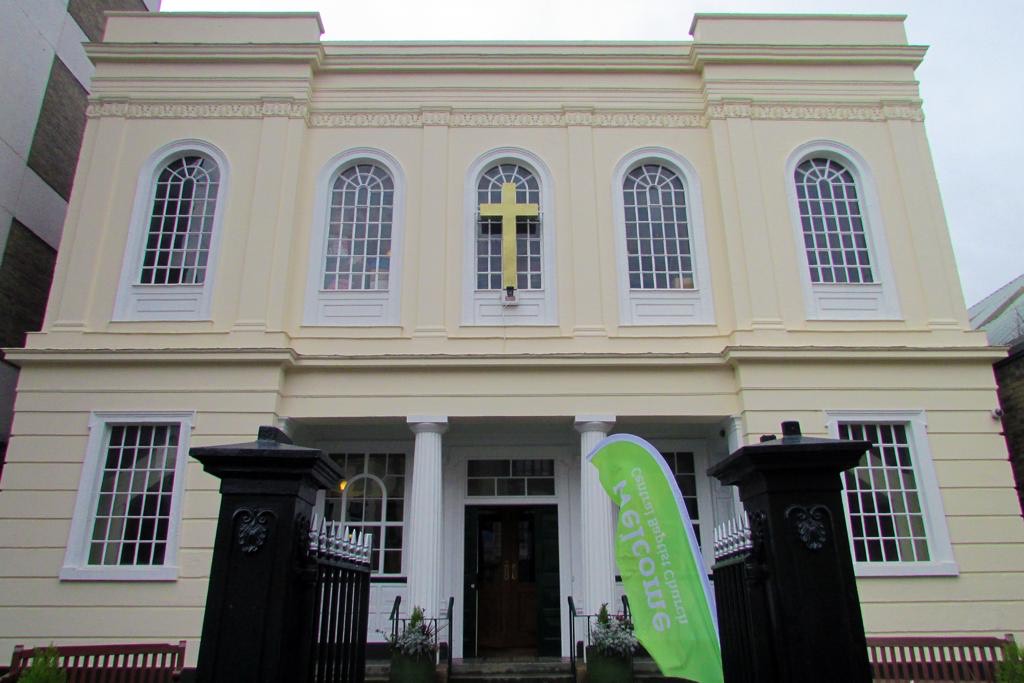
The Baptist Church is a Protestant Christian denomination emphasising believer’s baptism, the authority of Scripture, congregational governance, and religious liberty. Baptists hold that salvation is by grace through faith alone and that every individual must personally trust Christ.
Central Baptist Church (Charles Street Baptist Chapel), built in 1831, is Leicester’s last surviving 19th-century city-centre Baptist chapel and a Grade II listed treasure. Designed by William Flint in refined Georgian style, it houses the William Carey Museum, a historic tracker organ, and a lively multicultural congregation devoted to worship, fellowship, discipleship and mission including community outreach.
13. Leicester Central Mosque / The Islamic Centre Leicester
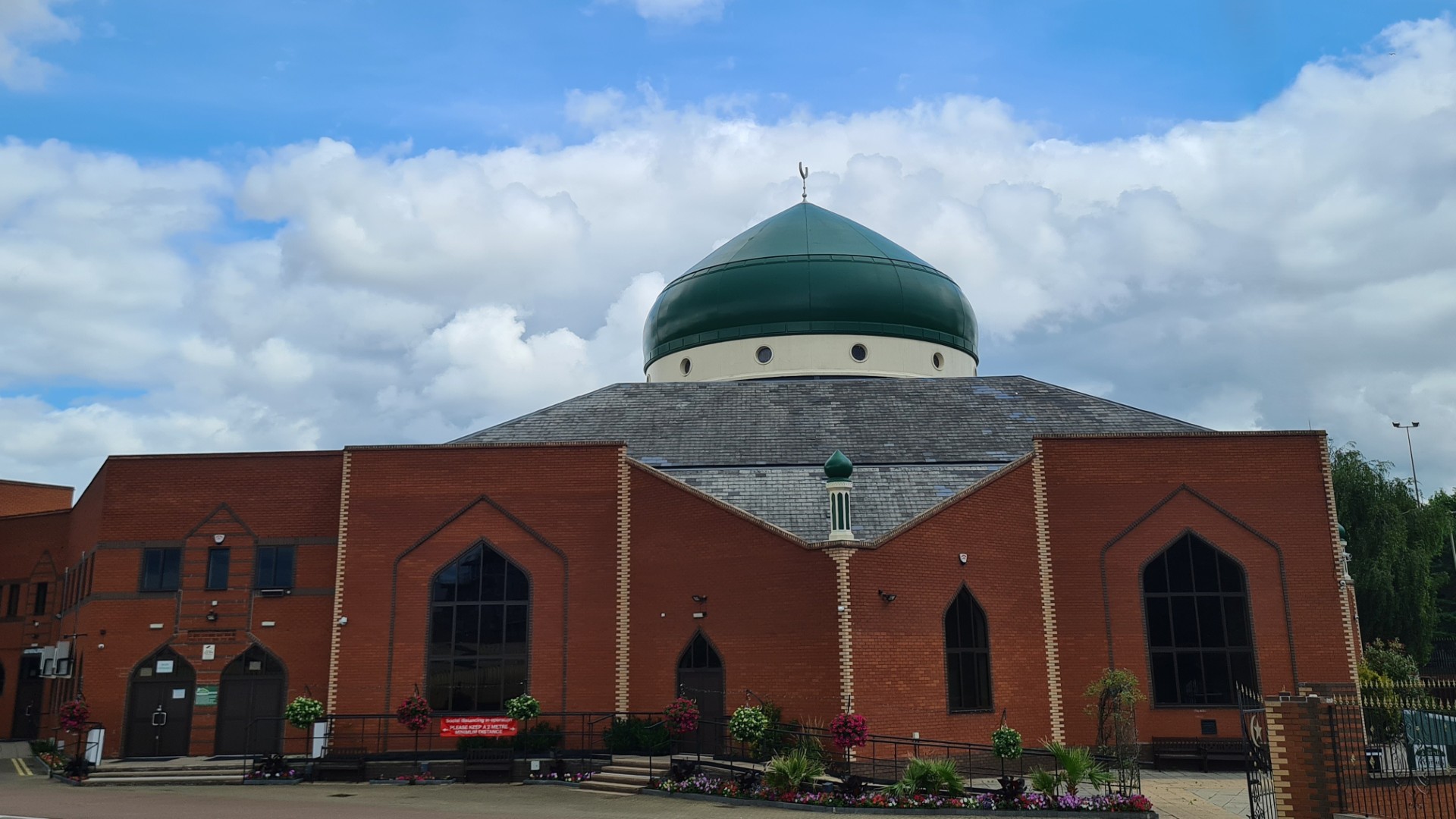
The Islamic Centre Leicester runs two sites in the city. All inter-faith and educational visits are held at the Central Mosque. The Islamic Centre Leicester has a public information centre and is able to facilitate pre-booked visits. Standard visitor sessions are Monday and Tuesday with two slots available on each day form 10:00 AM to 11:00 AM and 11:30 AM to 12:30 PM. Other sessions including evenings and weekends are available upon request.
Islam teaches submission to one God, five daily prayers, charity, fasting, and pilgrimage, fostering peace, justice, and community through the Qur’an and Prophet Muhammad’s example.
Leicester Central Mosque on Conduit Street, near the train station, had its foundation laid on 27 August 1988 by scholars from Britain and abroad. Managed by the Islamic Centre charity, it accommodates 1,500 in the main hall plus 300 women upstairs, with ablution facilities, madrassah, community hall, and mortuary.
It promotes interfaith dialogue, welcoming all to explore Islamic culture in the city’s diverse heart.
14. Baha’i Faith
The Bahá’í Faith is an independent world religion which teaches the oneness of God, religion and mankind. It promotes equality of women and men, harmony of science and religion, elimination of prejudice, and world peace through justice and unity. Baha’is have no priests, but instead an elected assembly which has existed continuously in Leicester since 1957. Currently there is no building and meetings are held in homes. Leicester Baha’is contribute to interfaith activities and social action across Leicester’s diverse neighbourhoods.

Keep exploring
-
Blaby Heritage Trails
Blaby Heritage Trails
-

Charwood Walks
Charwood Walks
-

King Richard III Trail
King Richard III Trail
-
King Richard III Walking Trail
King Richard III Walking Trail
-

Leicester Children’s Activity Trail
Leicester Children’s Activity Trail
-

Leicester Heritage Trail
Leicester Heritage Trail
-
Leicester Riverside Trails
Leicester Riverside Trails
-

Leicester Street Art Trail
Leicester Street Art Trail
-

Lutterworth Self-Guided Tour
Lutterworth Self-Guided Tour
-
Market Harborough Trails
Market Harborough Trails
-

New Walk Trail
New Walk Trail
-

Old Town Restaurants Trail
Old Town Restaurants Trail
-
Old Town Trail
Old Town Trail
-

Quorn History Trail
Quorn History Trail
-

Roman Leicester Walking Tour
Roman Leicester Walking Tour
-

Staunton Harold Trails
Staunton Harold Trails
-
The Leicestershire Round
The Leicestershire Round
-

The National Forest Trails
The National Forest Trails
-
The Newarke Trail
The Newarke Trail
-
The Thomas Cook Trail
The Thomas Cook Trail
-
Watermead Country Park
Watermead Country Park