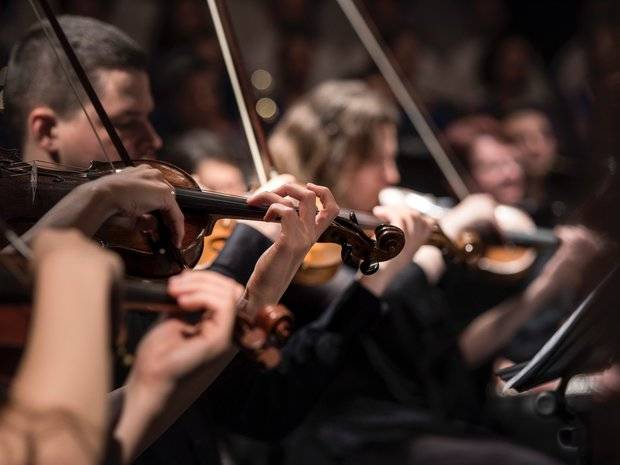
A Requiem for Humankind

'In Memoriam' (song cycle for soprano and piano) by Simon Mold
'Requiem for Humankind' for voices and organ by John Middleton - inspired by the words of Sir David Attenborough (A Life on Our Planet)
with Emma Trounson (soprano and music director) and Simon Headley (piano and organ)
IN MEMORIAM
Song Cycle by Simon Mold (b 1957)
This song cycle, consisting of seven songs written at various dates beginning in 1972, was put together in 2014 at the suggestion of the Welsh musician Benjamin Teague and first performed in St. Nicholas’s Church, Otham, Kent by Benjamin Odom and Trevor Brearley. The mood of the cycle moves from wistful nostalgia and thoughts on mutability through meditations on the futility and despair of war to an appreciation of individual honour and an acceptance of the will of Providence. Tears, Idle Tears (Tennyson) accepts that we sometimes weep unexpectedly for “the days that are no more”: the music aims to complement the feeling of nostalgia, the piano part contributing to the emotions of an often lilting melodic line. To Daffodils (Herrick/Mold), lamenting the shortness of our time on Earth, is set in the manner of a lute song. Merciless Day – Chaconne for the Fallen (Ballagher) is a heartfelt and powerful plea for an end to the horrors of war: the chaconne form of the music aims, by its repeated patterns, to underline the apparent inexorability of conflict. The text of “Some corner of a foreign field” (Mortimer) takes its cue from a famous line of Rupert Brooke to create a landscape of despair, which the music shadows in the manner of a recitative. By contrast, Vita Virtutis – ‘A virtuous life’ - focuses on how an individual, in spite of difficulties, can live honourably and decently, a sentiment echoed by the largely major mode of the music. The words are an adaptation of an anonymous poem carved into the stonework outside the Rutland Arms Hotel in Bakewell, Derbyshire. As well as giving the cycle its title, In Memoriam (Tennyson) sets a short section of the Poet Laureate’s famous extended elegy for his friend Arthur Hallam (1811-33): the poet’s love for him, he says, echoes all around him forever in nature. The vocal line has a gentle rise and fall that underlines the quiet confidence of the words. Finally, Epitaph (Gray) sets the famous last lines from the poet’s great paean to the common man, his Elegy Written in a Country Churchyard: the music attempts to combine feelings of resignation, admiration, and awe at a soul’s hope of a final resting place in “The bosom of his Father, and his God”
A REQUIEM FOR HUMANKIND
for choir and organ, by John Middleton (Premiere performance)
The composer writes: I read Sir David's book 'A Life on Our Planet' and thought "I must do something". Being a composer, this is what I've done, and the production comes at a time when some of his predictions on climate change are coming home to roost. Amongst other climatic disasters, wild fires have been raging across large areas of Europe.
Although the term 'requiem' might suggest doom and gloom, there is hope if we develop more effective co-operation than hitherto, and this is the basis for Sir David's optimistic approach. However, the politicians need to hear the voice of the people and this is very much the message of the requiem. In our times, it has become normal to celebrate lives well lived - we should therefore celebrate the achievements of humankind and try to leave a worthwhile legacy for future generations.
Using the form of Benjamin Britten's War Requiem, I added multicultural philosophical and religious writings to the standard elements of the Latin Mass. This seems particularly appropriate for a first performance in Leicester. Instead of Wilfred Owen's sorrowful and angry poems, I used my own summaries of Sir David's words to generate the main body of music, which seemed to write itself as if generated by a force.
Performances
View on map
Contact

© Event information from Data Thistle - 2026
The information included in the What's On Data has been supplied to Leicester City Council by Phylum Forge Limited t/a Data Thistle and is subject to changes. Users are advised to check with the venue or event organiser before relying in any way on the details published here. Leicester City Council and Phylum Forge Limited t/a Data Thistle are unable to accept responsibility for any loss or liability arising from any errors, omissions or inaccuracies in these listings.
Submit your event on Data Thistle.
Keep exploring
-

W*nkernomics
W*nkernomics
-
Bellowhead
Bellowhead
-

Danny Hart: Won’t Sit Down
Danny Hart: Won’t Sit Down
-

Hidden Histories: Haunting Histories Of…
Hidden Histories: Haunting Histories Of…
-

Autumn Steam Gala
Autumn Steam Gala
-

Christmas Wreath Festival
Christmas Wreath Festival
-
The Smyths
The Smyths
-

Fawlty Towers Christmas Weekend
Fawlty Towers Christmas Weekend